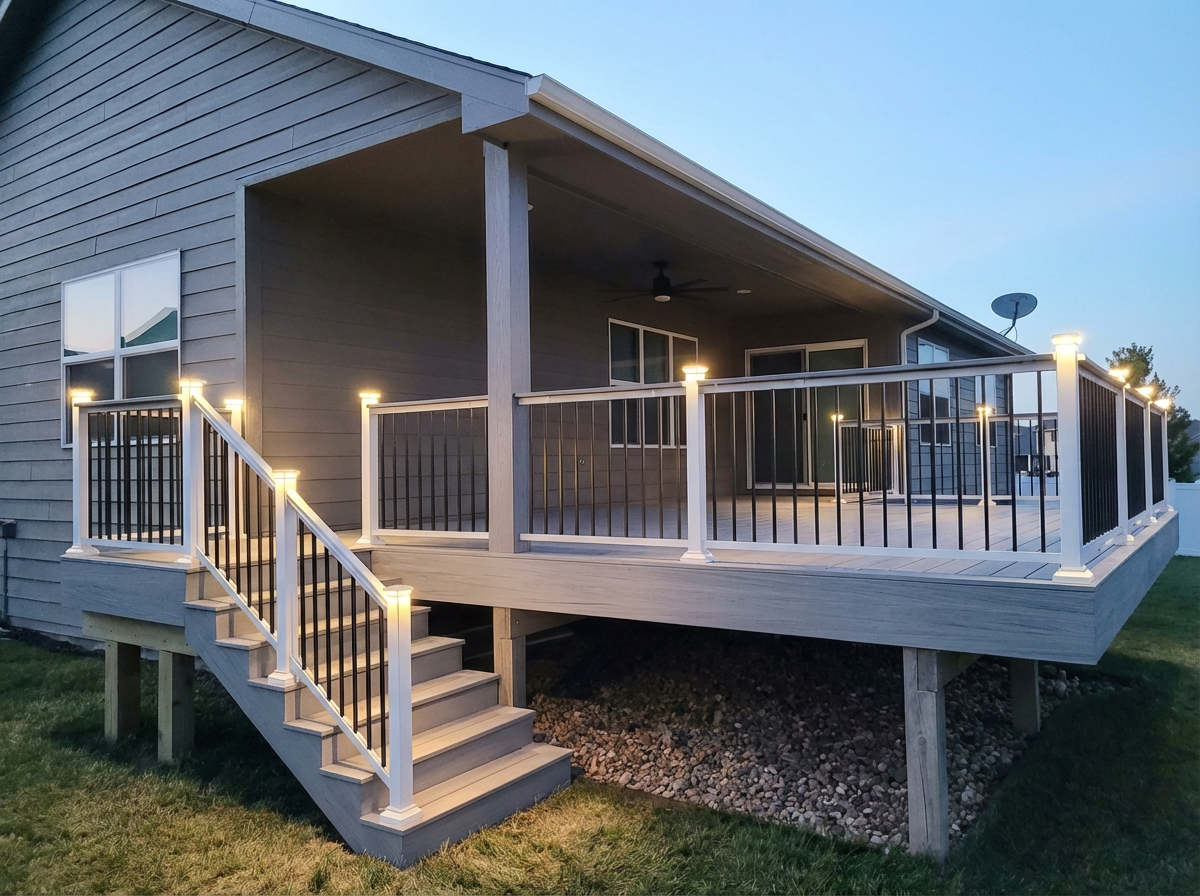
What to Know Before Building an Outdoor Kitchen on a Hardwood Deck
Installing a backyard kitchen creates the ultimate setup for year round outdoor entertaining. Homeowners across Tulsa are moving beyond simple charcoal grills and investing in fully equipped cooking stations right on their patios. The team at Paramount Patios Plus knows that adding heavy stone islands and commercial appliances requires serious foundational support. You cannot simply drop thousands of pounds of masonry onto a standard wood frame without risking a structural collapse.
Building on top of premium hardwood decks demands a different approach than pouring a concrete slab. Teak and Ipe offer incredible beauty and weather resistance but the framing underneath must be heavily reinforced to carry the dead weight of a kitchen build. Properly planning the substructure ensures your expensive appliances stay level and your decking remains safe for decades. Here is what you need to understand before breaking ground on your outdoor cooking space.
What to Consider Before Your Build
- Assessing Your Substructure for Heavy Loads
- Red Flags When Evaluating Outdoor Kitchen Contractors
- Can you put a built-in grill on a wood deck?
- Questions to Ask Before Breaking Ground
Assessing Your Substructure for Heavy Loads
A standard deck is engineered to hold people and patio furniture safely. Adding a stone veneer island with a built in refrigerator and gas grill completely changes the math on your weight distribution. The joists sitting under that kitchen footprint will bow and eventually snap if they are not specifically upgraded.
• Joist Spacing: Standard framing usually sits sixteen inches apart but heavy kitchen zones require joists spaced twelve inches or less to prevent sagging.
• Footing Depth: Additional concrete piers must be poured below the Oklahoma frost line directly under the heaviest sections of the masonry.
• Beam Upgrades: A standard double beam is often insufficient so builders must use triple beams or engineered lumber to carry the massive load.
Red Flags When Evaluating Outdoor Kitchen Contractors
The outdoor living industry attracts plenty of builders who cut corners on the unseen structural elements. Knowing what bad practices look like protects your property and your wallet from a failed project. When a contractor glosses over the foundation requirements you should reconsider hiring them.
• Ignoring The Frame: A builder who promises to install a heavy kitchen without inspecting or upgrading the joists underneath is setting you up for structural failure.
• Skipping Permits: Running gas lines and electrical circuits outdoors requires municipal permits and avoiding them puts your home insurance at risk.
• Poor Material Choices: Using indoor rated cabinets or standard drywall outdoors guarantees water damage after a single Tulsa storm.
Taking the time to evaluate a contractor properly ensures you get a safe and permanent result. This is something clients notice firsthand when we correct poorly built outdoor spaces.
► Client Experience: Paramount Patios handled a deck tear-out and new concrete patio with drainage needs expertly. They scheduled around rain, preserved our grass, communicated clearly, and paid great attention to detail. Cleanup was perfect, and the result looks amazing!
Choosing a professional who handles the heavy foundational work properly keeps your property safe and functional.
Can you put a built-in grill on a wood deck?
Yes you can definitely install a built in grill on a wood structure but it requires highly specific heat management. Wood is obviously combustible so dropping a gas grill directly into a timber frame is a massive fire hazard. Professional builders utilize insulated grill jackets made of heavy gauge stainless steel to separate the extreme heat of the firebox from the surrounding wood.
• Insulated Jackets: These dual walled metal liners act as a heat shield and are strictly required by manufacturers for any combustible enclosure.
• Ventilation Panels: Trapped gas is a serious danger so the base structure must feature stainless steel venting panels to allow safe airflow.
• Deck Protection: Heavy duty grill mats or custom metal pans should sit under the cooking zone to catch hot grease before it ruins your premium boards.
Questions to Ask Before Breaking Ground
Hiring a builder for a complex outdoor kitchen requires clear communication about utilities and materials. You need to know exactly how the project integrates with your existing home systems. Asking the right questions ensures your hardwood decks are protected throughout the construction phase.
• Utility Routing: Ask exactly how the gas and electrical lines will be routed through the deck framing to avoid ugly exposed pipes.
• Material Sourcing: Verify that the contractor uses marine grade stainless steel hardware that will not rust and stain your premium wood boards.
• Project Timeline: Confirm whether the builder handles the utility connections in house or if you will be left waiting weeks for subcontracted plumbers.
Building a Safe and Functional Entertaining Space
Planning an outdoor kitchen correctly means prioritizing the framing and safety requirements just as much as the visible countertops. Getting the structural details right guarantees your investment will host family gatherings safely for years to come. Contact our team today to evaluate your current deck and start designing a backyard kitchen built to last.
Share This Blog